
Spray Foam Insulation for General Contractors in Middle Tennessee
Complete Insulation provides open-cell and closed-cell spray foam installation for general contractors, builders and developers throughout Murfreesboro, Nashville and Middle Tennessee.
We install spray polyurethane foam in residential, commercial and metal-building construction. Our team coordinates product selection, installation thickness, site preparation and application timing with the project’s approved scope and construction schedule.
Complete insulation is licensed and insured (General Liability, Worker Compensation, Vehicle and Umbrella).
Middle Tennessee Commercial Insulation Contractor
Complete Insulation is based in Murfreesboro and serves commercial construction projects throughout Nashville and Middle Tennessee. Contact our team to confirm scheduling and availability for your project location.
Spray Foam Applications for Construction Projects
Spray foam begins as a liquid and expands against the application surface. This allows it to insulate irregular areas while sealing many of the joints and gaps that permit uncontrolled air movement.
Depending on the approved building assembly, spray foam may be installed in:
Exterior walls
Roof decks
Vented or unvented attic assemblies
Crawl-space walls
Floors over unconditioned areas
Rim and band joists
Knee walls and roof slopes
Cantilevers
Bonus rooms
Metal walls and ceilings
Renovated building-envelope areas
Spray foam should be applied to surfaces that are accessible, clean, dry and suitable for the specified product.
-
Open-Cell Spray Foam Insulation
Open-cell spray foam has a softer, more flexible structure. It expands significantly during application and can provide insulation, air sealing and sound absorption within an approved assembly.
Contractors may specify open-cell foam for:
Wood-framed exterior walls
Attic roof decks
Roof slopes and knee walls
Bonus rooms
Interior sound-control applications
Other protected interior cavities
The required thickness depends on the product, project specifications, desired R-value and air-barrier requirements.
-
Closed-Cell Spray Foam Insulation
Closed-cell spray foam is denser and more rigid than open-cell foam. It generally provides a higher R-value per inch and greater resistance to water vapor.
Closed-cell foam may be considered for:
Metal buildings
Crawl-space walls
Floors over unconditioned spaces
Rim joists
Areas with limited cavity depth
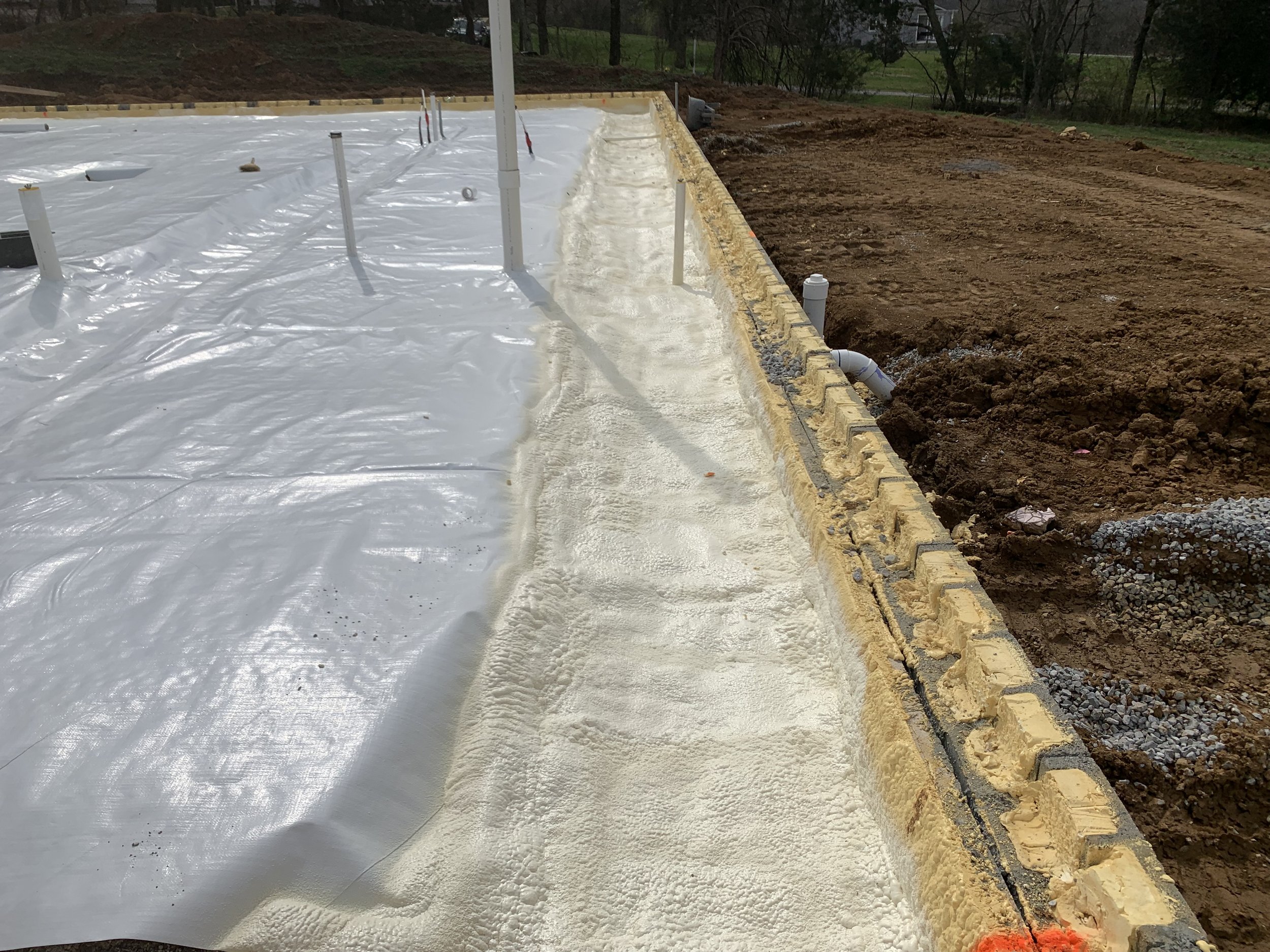
Masonry and concrete surfaces
Exterior-facing commercial assemblies
Applications requiring increased moisture resistance
Closed-cell spray foam is not a substitute for repairing active leaks, correcting drainage problems or addressing excessive indoor humidity.
-
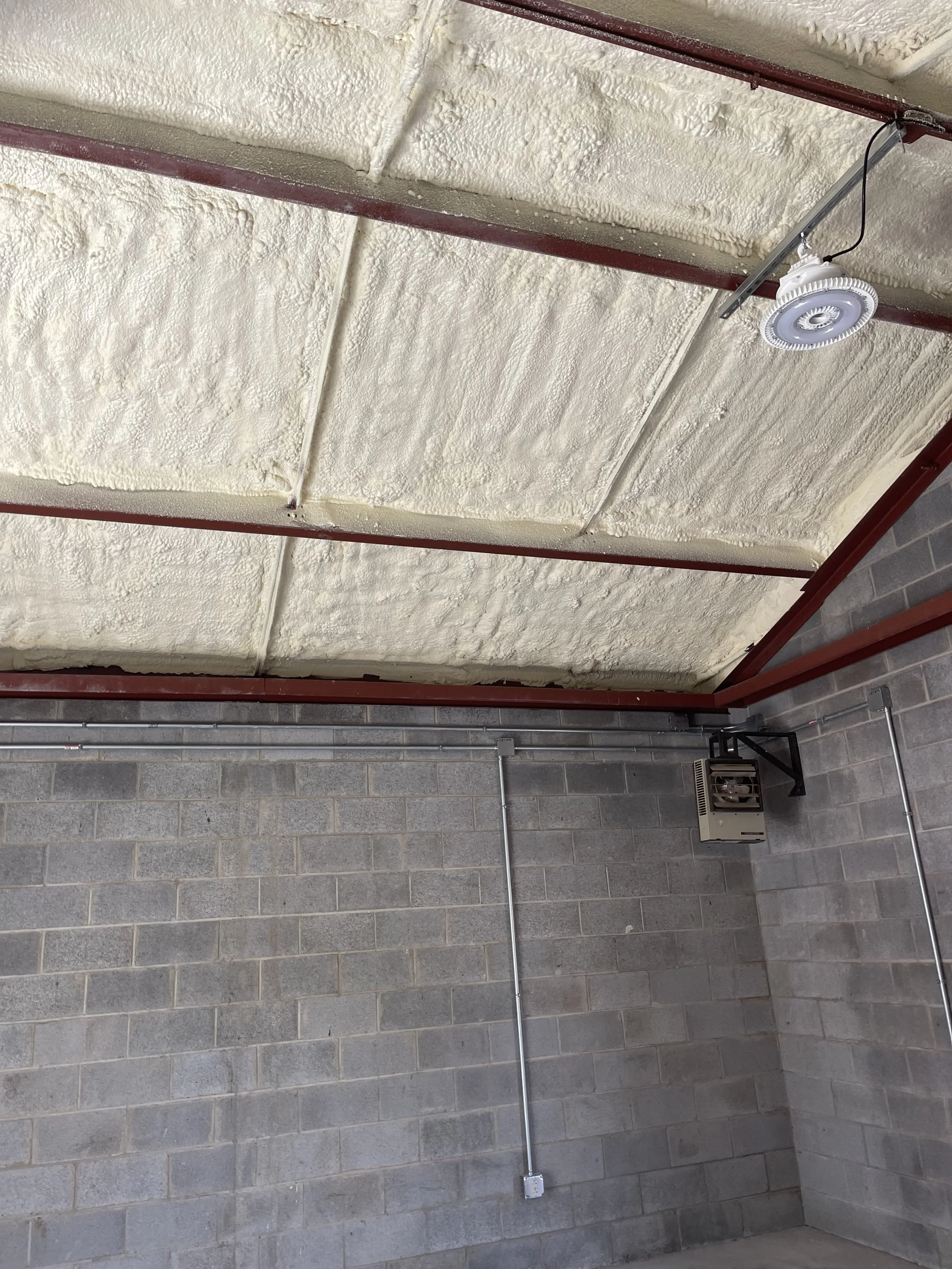
Spray Foam for Metal Buildings
Spray foam conforms to corrugated metal panels, framing and irregular surfaces, making it an effective option for many pre-engineered metal buildings.
It can help reduce heat transfer, uncontrolled air movement and condensation risk in:
Warehouses
Manufacturing facilities
Automotive shops
Agricultural buildings
Storage facilities
Equipment buildings
Commercial workshops
Barndominiums
The metal surface must be evaluated for cleanliness, moisture, rust, coatings and compatibility before application.
-
Spray Foam for Residential Construction
Complete Insulation works with custom-home builders, residential contractors and developers on new homes, additions and renovation projects.
Spray foam can be included in a residential insulation package for rooflines, exterior walls, crawl spaces, floors and difficult-to-insulate areas. It may also be combined with fiberglass or stone wool in other parts of the home.
-
Spray Foam for Commercial Construction
Commercial spray foam applications may include offices, retail properties, mixed-use buildings, warehouses, workshops and other commercial facilities.
Our team coordinates application with steel framing, mechanical systems, roof assemblies, interior finishes and fire-protection requirements. Commercial work may also be completed by floor, suite or released construction zone when appropriate.
-
Spray Foam Site-Readiness Requirements
Spray foam installation requires more preparation than many batt-insulation applications. Confirming site readiness before mobilization helps protect nearby materials and reduces scheduling delays.
Specific requirements vary by product, building and time of year.
-
Protecting Adjacent Surfaces and Work Areas
Spray foam adheres strongly to most surfaces once applied. Windows, finished floors, equipment, vehicles, mechanical components and other nearby materials may require masking or removal before work begins.
General contractors should prevent unauthorized access to the application area and avoid scheduling other trades in the same zone during spraying and initial curing.
-
Re-Entry and Ventilation Planning
Unprotected workers and building occupants must remain outside the spray area during application. Ventilation and re-entry requirements depend on the product manufacturer, application conditions and project safety plan.
The general contractor should account for restricted access when scheduling inspections and other trades. Complete Insulation will communicate the applicable work-area requirements before installation.
-
Thermal and Ignition Barriers
Some spray foam applications must be separated from occupied spaces by an approved thermal barrier, ignition barrier or protective coating. The required protection depends on the foam’s location, building use, product approval and applicable codes.
Barrier materials and responsibility for their installation should be clearly identified within the project scope before work begins.
Request a Spray Foam Insulation Bid
Send Complete Insulation your project plans, spray foam specifications, required thicknesses, application areas, bid deadline and anticipated installation schedule.
Call Complete Insulation at (615) 614-8800 to request a spray foam insulation bid for your Middle Tennessee construction project.
Spray Foam Insulation FAQs for Contractors
What is the difference between open-cell and closed-cell spray foam?
Open-cell foam is lighter, softer and more flexible. Closed-cell foam is denser, more rigid and typically provides a higher R-value per inch. Product selection depends on the approved assembly and project requirements.
Can spray foam function as an air barrier?
Certain spray foam products can qualify as air-barrier materials when installed at the manufacturer-required thickness. The selected product and thickness should match the project specifications.
Can open-cell and closed-cell foam be used on the same project?
Yes. Different building areas may require different foam products. Each application should be identified clearly in the plans, specifications and agreed project scope.
Does spray foam require a thermal barrier?
Many applications require spray foam to be separated from occupied spaces by an approved thermal barrier. Some attics and crawl spaces may require an ignition barrier or another approved protective system. Requirements vary by assembly.
When should spray foam be installed during construction?
Spray foam is generally installed after framing and necessary rough-ins are complete but before drywall or other materials block access. Roofing, windows and other weather-protection components should be complete where required.
Can plumbing or wiring be installed after spray foam?
Later trade work may damage the installed foam and make utilities harder to access. Electrical, plumbing and mechanical rough-ins should generally be completed and inspected before spray foam installation.
Can spray foam be applied to wet surfaces?
No. Application surfaces should be dry and within the product’s acceptable conditions. Active leaks and moisture problems must be corrected before installation.
Can spray foam be installed during cold weather?
Some products can be installed in colder conditions, but substrate and ambient temperatures must remain within the manufacturer’s requirements. Temporary conditioning or project rescheduling may be necessary.
How should overspray-sensitive areas be prepared?
Finished surfaces, equipment, windows, doors, vehicles and other sensitive materials should be removed, covered or isolated before spraying begins.
Can spray foam installation be completed in phases?
Yes. Large projects may be divided into approved installation zones. Each zone must be accessible, properly prepared and separated from other trade activity.
What happens if the spray foam is damaged after installation?
Damaged areas should be identified before the assembly is closed. Repairs can then be evaluated and completed as part of the project’s insulation punch list.
Do you provide spray foam for residential and commercial contractors?
Yes. Complete Insulation provides spray foam installation for homes, commercial buildings, multifamily developments, warehouses, metal structures and renovation projects.