
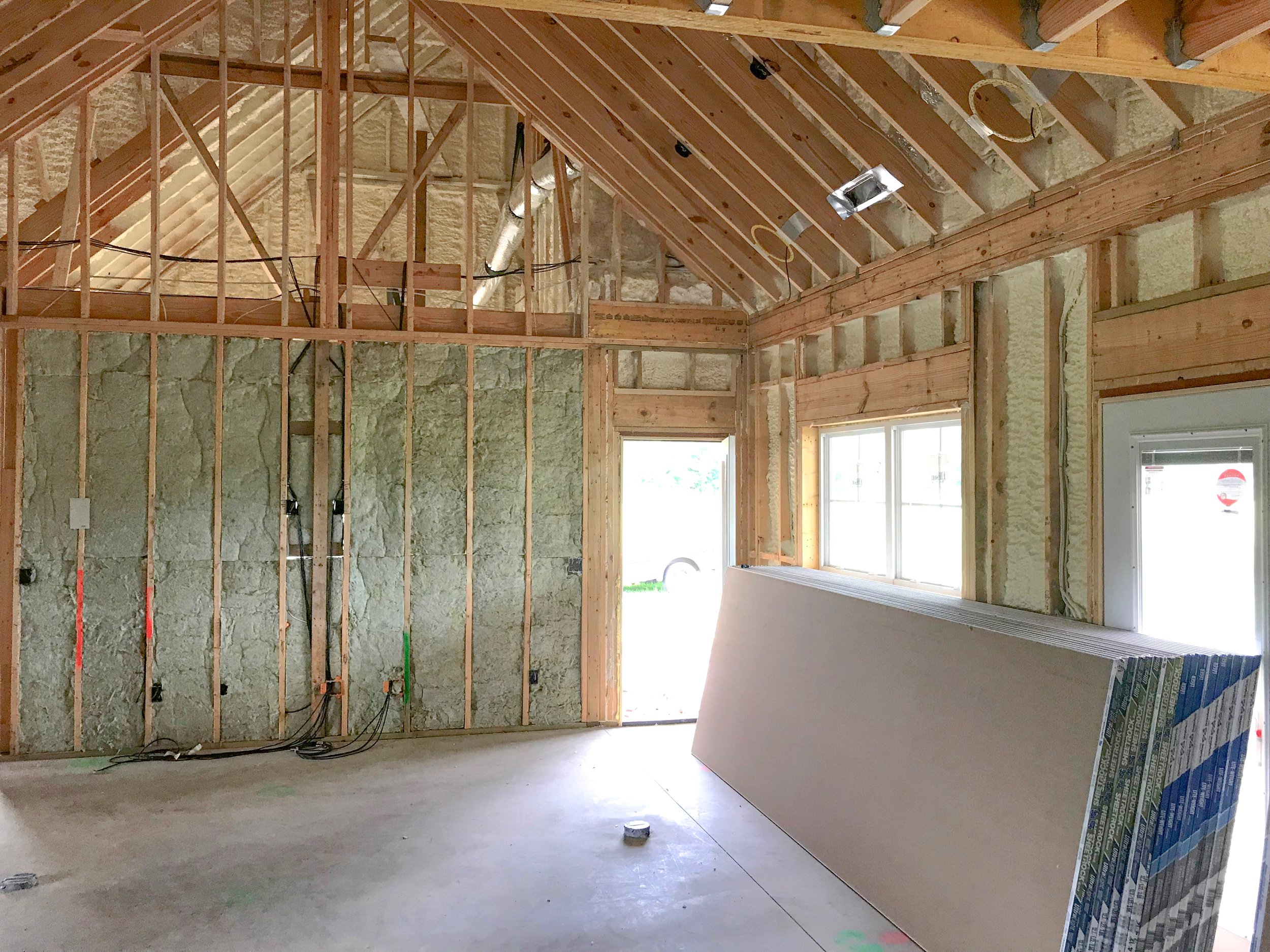
Rockwool Mineral Fiber Batts
Complete Insulation provides sound-attenuation insulation installation for general contractors, builders and developers throughout Murfreesboro, Nashville and Middle Tennessee.
We install fiberglass and stone wool insulation in interior walls, floors and ceilings for residential, commercial and multifamily construction. Our team follows the designated assemblies and coordinates installation before drywall and other finishes are completed.
Complete insulation is licensed and insured (General Liability, Worker Compensation, Vehicle and Umbrella).
Complete Insulation works with home builders, general contractors, developers and property managers on new construction, renovations and tenant-improvement projects.
Sound-Control Insulation for Construction Projects
Sound-attenuation insulation absorbs airborne sound inside framed cavities, helping reduce noise transfer between adjoining spaces. It can improve privacy and comfort in homes, offices, multifamily buildings, healthcare facilities and hospitality properties.
Common applications include:
Interior partition walls
Tenant separation walls
Multifamily walls and ceilings
Floors between occupied levels
Private offices
Conference rooms
Bedrooms and bathrooms
Media and music rooms
Hotel rooms
Medical and consultation rooms
Classrooms and training rooms
Laundry and mechanical areas
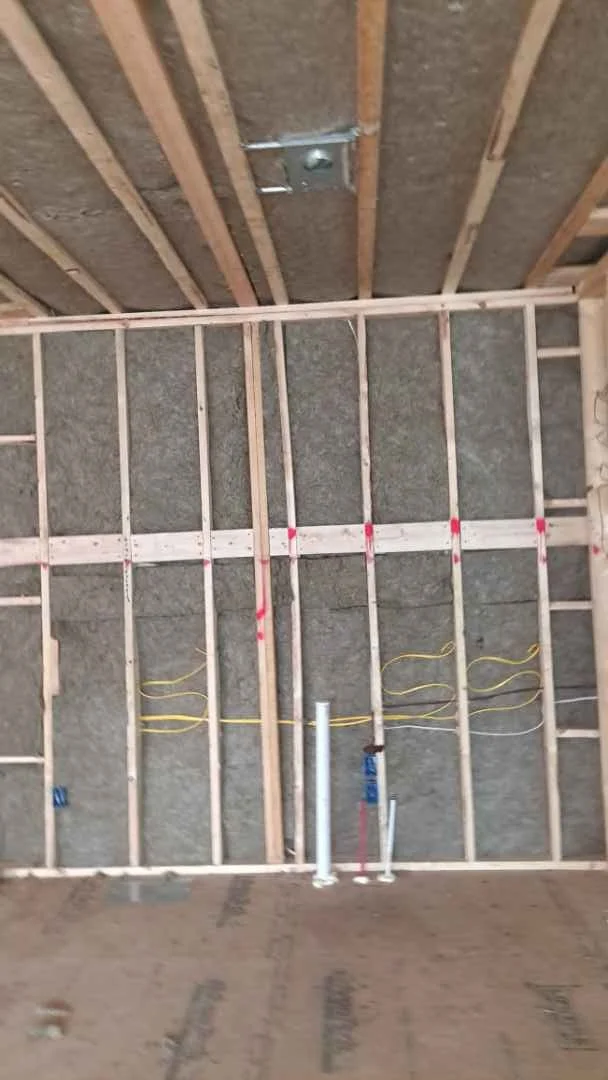
Understanding STC and IIC Ratings
The Sound Transmission Class, or STC, rating describes how well a complete building assembly reduces airborne sound, such as conversation or television noise.
The Impact Insulation Class, or IIC, rating relates to impact sounds transmitted through floors and ceilings, such as footsteps or dropped objects.
Insulation alone does not carry the performance of the entire completed wall or floor. Framing, drywall, floor coverings, isolation components, penetrations and workmanship all influence the final assembly.
Sound Attenuation vs. Soundproofing
Sound attenuation reduces sound transmission; it does not make a room completely soundproof. Insulation is one component of the full wall, floor or ceiling assembly.
Overall sound performance may also depend on:
Framing design
Drywall type and number of layers
Resilient channels or isolation clips
Doors and windows
Electrical boxes and penetrations
Ductwork and plumbing pathways
Perimeter and joint sealing
Structural connections
Complete Insulation installs the insulation portion of the specified sound-control assembly.
-
Fiberglass Sound Attenuation Insulation
Fiberglass batts can absorb sound within wood- and steel-framed cavities. They are a practical option for residential and commercial projects requiring reduced noise transfer between rooms.
Fiberglass sound-control applications include:
Bedroom and bathroom walls
Home offices and media rooms
Commercial offices
Conference rooms
Retail tenant partitions
Hotel rooms
Apartment walls
Floors and ceilings
Batts must be properly fitted around pipes, wiring, electrical boxes, blocking and other cavity obstructions.
-
ROCKWOOL Safe’n’Sound® Stone Wool Insulation
Complete Insulation offers ROCKWOOL Safe’n’Sound®, a stone wool batt designed for acoustic performance and fire resistance in interior wood- and steel-framed walls, floors and ceilings.
Its dense, friction-fit construction helps absorb sound while remaining firmly positioned within the cavity. It is well suited for bedrooms, bathrooms, home theaters, offices, workshops and other interior areas where noise control is a priority.
The product and assembly must be appropriate for the project specifications and intended application.
-
Residential Sound-Attenuation Applications
Sound-control insulation can make new homes more comfortable by reducing noise between active and quiet spaces.
Popular locations include:
Primary bedroom walls
Bathrooms
Nurseries
Laundry rooms
Home offices
Home theaters
Bonus rooms
Game rooms
Workshops
Garage separation walls
Floors between levels
Barndominium living areas
Builders can include sound attenuation as a standard feature or offer it as an upgrade during construction.
-
Commercial Sound-Attenuation Applications
Commercial sound control can improve privacy and reduce distractions in workplaces, tenant spaces and customer-facing environments.
Applications include:
Executive and private offices
Conference rooms
Counseling rooms
Medical examination rooms
Classrooms
Hotel guest rooms
Restaurants
Restrooms
Break rooms
Tenant separation walls
Recording and production rooms
Interior warehouse offices
Projects with specific acoustic-performance requirements should identify the complete tested or designed assembly in the construction documents.
-
Multifamily Sound Attenuation
Sound control is particularly important in apartments, condominiums, townhomes and mixed-use buildings. Complete Insulation installs sound-attenuation materials in designated walls, floors and ceilings between units and shared spaces.
Potential locations include:
Unit separation walls
Floors between apartments
Corridor walls
Stairwells
Laundry rooms
Mechanical areas
Clubhouses and amenity spaces
Mixed-use residential and commercial separations
Installation can be coordinated by building, floor, unit group or released construction zone.
-
Installation Before Drywall
Sound-attenuation insulation is generally installed after electrical, plumbing and mechanical rough-ins are complete but before drywall.
Before installation, designated cavities should be:
Properly framed
Accessible to installers
Free from active leaks
Cleared of unnecessary debris
Complete with required rough-ins
Identified on the plans or site
Ready without conflicting trade activity
Sound-control areas should be clearly marked to distinguish them from standard thermal-insulation locations.
Reducing Sound Paths Around Penetrations
Sound can travel through openings that bypass the insulated cavity. Electrical boxes, plumbing penetrations, ductwork and gaps around the assembly may reduce overall performance.
Where the project documents require acoustic sealants, putty pads, isolation hardware or specialized detailing, responsibility for those components should be established before construction begins.
Sound-Attenuation Insulation FAQs for Contractors
What is sound-attenuation insulation?
Sound-attenuation insulation is installed in walls, floors and ceilings to absorb sound and reduce noise transfer between building areas.
Is sound attenuation the same as soundproofing?
No. Sound attenuation reduces sound transmission, while soundproofing suggests eliminating it. Effective noise control depends on the complete building assembly.
Which insulation materials are used for sound control?
Fiberglass and stone wool are commonly used inside sound-control assemblies. Product selection depends on the plans, specifications, cavity depth and desired assembly performance.
Can sound-attenuation insulation be installed in steel-stud walls?
Yes. Fiberglass and appropriate stone wool batts can be installed in steel-framed interior partitions.
Does insulation alone determine an STC rating?
No. STC applies to the complete wall, floor or ceiling assembly. Framing, drywall, doors, penetrations, sealing and other components affect the final performance.
What is the difference between STC and IIC?
STC relates primarily to airborne sound passing through an assembly. IIC relates to impact noise transmitted through floor and ceiling assemblies.
Where should sound insulation be installed in a new home?
Popular locations include bedrooms, bathrooms, nurseries, laundry rooms, home offices, theaters, bonus rooms, garage separation walls and floors between levels.
Where is sound attenuation used in commercial construction?
Common locations include private offices, conference rooms, medical rooms, classrooms, hotels, restaurants, restrooms and tenant separation walls.
Can you install sound insulation in multifamily buildings?
Yes. We install sound-attenuation insulation in designated walls, floors and ceilings within apartments, condominiums, townhomes and mixed-use properties.
When should sound-attenuation insulation be installed?
It is generally installed after required rough-ins are complete and before drywall. The cavities should be accessible and clearly identified.
Can electrical boxes reduce sound-control performance?
Yes. Back-to-back boxes, unsealed penetrations and openings can create sound pathways. The project documents may require specific box placement or acoustic treatments.
Can sound-attenuation work be completed in phases?
Yes. Multifamily and commercial projects may be scheduled by building, floor, unit group, tenant suite or released work area.