
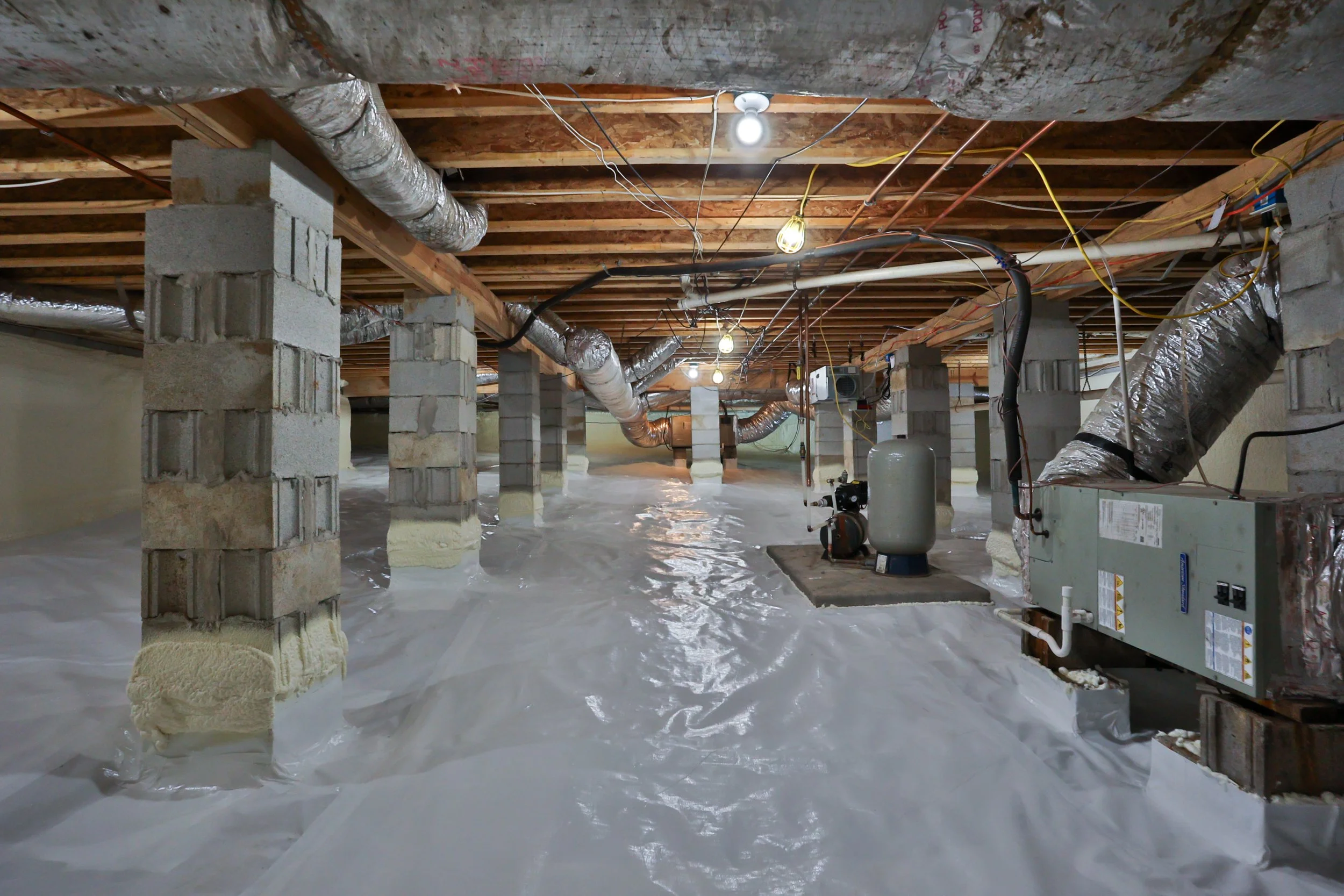
Crawlspace Restoration and Insulation Services in Murfreesboro, TN
A damp, dirty or poorly insulated crawlspace can affect the comfort, air quality and energy efficiency of the entire building. Complete Insulation provides professional crawlspace restoration services for homeowners and businesses in Murfreesboro, Nashville and surrounding Middle Tennessee communities.
We remove damaged insulation, install vapor barriers, improve crawlspace insulation and convert qualifying vented crawlspaces into sealed, unvented systems. Every recommendation is based on the property’s construction, moisture conditions and restoration needs.
If you have cold floors, musty odors, sagging insulation or excessive moisture beneath your property, it may be time to schedule a crawlspace evaluation.
What Is Crawlspace Restoration?
Crawlspace restoration is the process of removing damaged materials, addressing insulation deficiencies and creating a cleaner, better-protected space beneath the building.
Depending on existing conditions, crawlspace restoration may include:
Removing wet, dirty or pest-contaminated insulation
Cleaning loose insulation and debris from accessible areas
Installing new floor or foundation-wall insulation
Sealing gaps around rim and band joists
Installing a ground vapor barrier
Encapsulating the crawlspace
Sealing foundation vents when appropriate
Converting a vented crawlspace to an unvented system
Preparing the space for humidity-control equipment
Coordinating with pest, drainage or remediation professionals
Crawlspace restoration does not repair foundation damage, plumbing leaks or exterior drainage problems. Those conditions should be corrected before the new insulation system is completed.
-
Spray Foam Insulation for Crawlspaces
Closed-cell spray foam may be installed along foundation walls, rim joists or other approved crawlspace surfaces. It provides insulation and air sealing within a continuous application and offers greater resistance to water vapor than open-cell foam.
Closed-cell spray foam may be appropriate for:
Foundation walls
Rim and band joists
Floors above unconditioned areas
Irregular framing cavities
Areas with limited space for insulation
Sealed crawlspace assemblies
Spray foam should only be installed after the application surfaces are dry, clean and free from conditions that could interfere with adhesion.
-
Crawlspace Insulation Removal
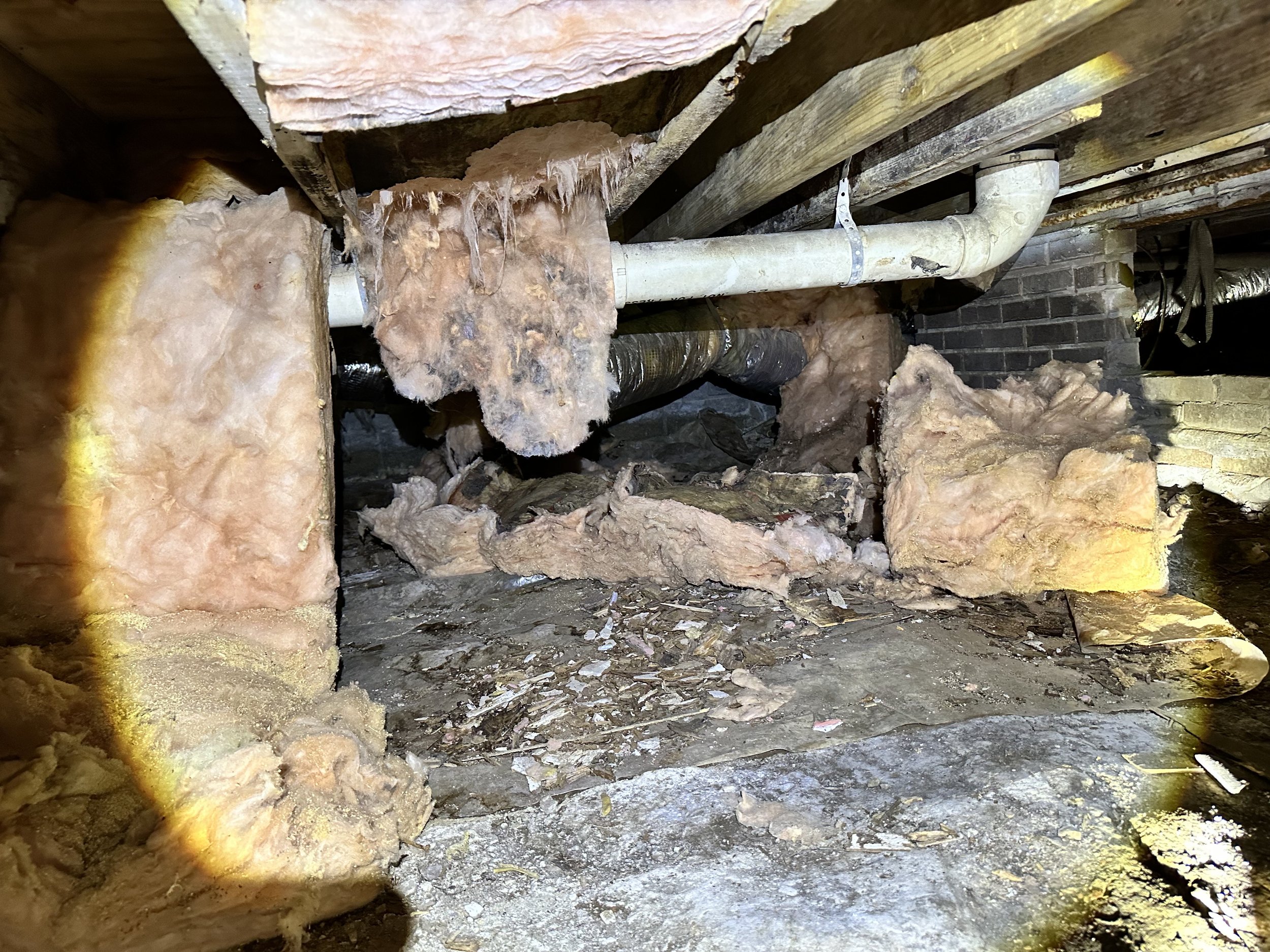
Fiberglass installed beneath a floor can sag, fall or become damaged by moisture and pests. Once the material is displaced, contaminated or compressed, it may no longer perform as intended.
Complete Insulation can remove accessible crawlspace insulation to prepare the area for cleaning, repairs and a new insulation system. Removed materials are contained and transported off-site for appropriate disposal.
Before replacement insulation is installed, the property owner may need to address:
Plumbing or HVAC condensation leaks
Exterior water intrusion
Standing water and drainage problems
Pest infestations and entry points
Mold or microbial contamination
Damaged floor framing
Unsafe electrical conditions
-
Crawlspace Vapor Barriers
A crawlspace vapor barrier is a moisture-resistant material installed over exposed soil. Its primary purpose is to reduce the amount of ground moisture entering the crawl space as water vapor.
A basic vapor barrier may be appropriate when the main concern is exposed soil. Installation can include fitting the material around foundation piers and other obstructions and securing overlapping sections.
A vapor barrier is an important part of many crawlspace systems, but it does not stop plumbing leaks, groundwater intrusion or rainwater entering through the foundation.
-
Crawlspace Encapsulation
Crawlspace encapsulation is a more comprehensive approach than installing a basic ground vapor barrier. The system is designed to separate the crawlspace from exposed soil and humid outdoor air.
Depending on the property, encapsulation may include:
A durable ground vapor barrier
Coverage along foundation walls
Sealing around piers and penetrations
Sealed foundation vents
Foundation-wall insulation
Rim-joist insulation and air sealing
Insulated access doors
Humidity-control planning
Before encapsulation begins, active water, pest, mold and structural problems should be properly addressed.
-
Vented-to-Unvented Crawlspace Conversion
Traditional vented crawlspaces allow outdoor air to move beneath the building. During humid Middle Tennessee weather, that air can introduce moisture that condenses on cooler surfaces.
Some crawlspaces may be converted into sealed, unvented assemblies. This process can include sealing vents, installing a ground and wall vapor barrier, insulating foundation walls and establishing an approved method of moisture or humidity control.
Not every crawlspace is ready for conversion. Drainage, combustion equipment, ductwork, access and applicable building requirements should be evaluated first.
-
Fiberglass Crawlspace Insulation
Fiberglass batts may be installed between floor joists in certain vented crawlspace assemblies. When properly fitted and supported, fiberglass can reduce heat transfer between the crawlspace and the occupied rooms above.
Fiberglass may not be appropriate where persistent moisture, pests or repeated sagging have affected the existing material. Our team can evaluate the crawlspace before recommending fiberglass or a sealed foundation-wall system.
Signs Your Crawlspace May Need Restoration
Crawlspaces are easy to overlook because they are rarely part of your daily routine. However, problems beneath the building can eventually affect the occupied areas above.
Common warning signs include:
Cold or uncomfortable floors
Musty or earthy odors
High indoor humidity
Sagging fiberglass insulation
Wet or stained insulation
Visible condensation
Standing water
Pest droppings or nesting material
Torn or missing vapor barriers
Mold-like growth on building materials
Rusted ductwork or metal components
Uneven heating and cooling
Increasing energy bills
An inspection can help determine whether the crawlspace needs new insulation, material removal, a vapor barrier or a more complete encapsulation system.
Why Crawlspace Restoration Matters
A crawlspace forms part of the building envelope. When it contains excessive moisture, open vents, air leaks or damaged insulation, outdoor conditions can influence the rooms above.
Professional crawlspace restoration can help:
Reduce unwanted heat transfer through the floors
Improve comfort in rooms above the crawlspace
Limit ground moisture entering the space
Reduce humid air moving into the building
Protect new insulation from direct ground moisture
Create a cleaner environment beneath the property
Prepare the space for long-term humidity management
Reduce conditions that contribute to odors and material damage
Results depend on the complete system, including drainage, plumbing, ventilation, air sealing and indoor humidity control.
Crawlspace Restoration FAQs
What is included in crawlspace restoration?
Restoration may include removing damaged insulation, clearing accessible debris, installing new insulation, adding a vapor barrier or completing an encapsulation system. The exact scope depends on the crawlspace.
What is the difference between restoration and encapsulation?
Restoration describes the overall process of improving a damaged or poorly performing crawlspace. Encapsulation is a specific moisture-control system that separates the space from exposed soil and outside air.
Should old crawlspace insulation be removed?
Insulation may need to be removed if it is wet, sagging, contaminated, compressed or damaged by pests. Clean and properly installed insulation may not always require replacement.
Can crawlspace restoration eliminate musty odors?
It may reduce odors caused by damp soil, contaminated insulation or humid crawlspace air. Plumbing leaks, mold, pests and other odor sources must also be addressed.
Does a vapor barrier stop crawlspace flooding?
No. A vapor barrier reduces moisture vapor entering from the ground. It does not replace exterior drainage, foundation repairs or a properly designed water-management system.
Can you encapsulate a crawlspace with standing water?
Standing water and its source should be corrected before encapsulation. Covering an unresolved water problem can trap moisture beneath the new system.
Is spray foam or fiberglass better for a crawlspace?
The better option depends on whether the crawlspace is vented, its moisture conditions and where the thermal boundary is located. We evaluate the structure before recommending a material.
Can crawlspace restoration lower energy costs?
Proper insulation and air sealing can reduce unwanted heat transfer and air movement. Actual savings depend on the building, HVAC system and existing conditions.
Do you remove mold from crawlspaces?
Standard insulation restoration does not include mold remediation. Suspected microbial growth should be evaluated and treated by an appropriately qualified professional before new insulation is installed.
Do you provide crawlspace restoration outside Murfreesboro?
Yes. Complete Insulation serves Nashville, Smyrna, La Vergne, Franklin, Brentwood, Lebanon, Mt. Juliet, Columbia, Shelbyville and other Middle Tennessee communities.
Schedule a Crawlspace Evaluation
Do not let wet insulation, exposed soil or humid crawlspace air continue affecting the area beneath your property. Complete Insulation can evaluate the existing conditions and recommend insulation removal, a vapor barrier, encapsulation or a new crawlspace insulation system.